Reflecting upon those turbulent times from long ago in Warsaw, I recall the shouts that echoed through the stairwell of an apartment block: “What’s wrong with you again?! How much can one take?! I’ve had enough of this!” The woman’s voice carried throughout the entire building.
At that moment, Zosia and Mateusz were making their way up the stairs. They stopped dead in their tracks, as though confronted by an unseen barrier. Their eyes met briefly, conveying understanding without words: it was best to leave. Sighing together, they turned and quietly walked away from the building, with no plans to return to the apartment that day.
No one would choose to spend an evening enduring endless parental arguments, least of all them. The pair marched purposefully to the next entrance where their grandmother Jadwiga resided. Her place had become their haven in recent times. What once were weekend visits now turned into nightly refuge.
The parental home’s atmosphere had grown intolerable. Parents shouted at each other ceaselessly, seeming to forget all else. Worse, they often pulled the children into these disputes.
The mother might turn to her daughter demanding, “Tell me I’m right. You agree, don’t you?”
The father would address his son without waiting, “No, I’m correct here! Back me up!”
Zosia and Mateusz kept quiet. Choosing sides or joining the conflict held no appeal. They sought only quiet, peace, and warmth, which they found with their grandmother.
These episodes repeated daily like a broken record no one would stop. The children recognized the warning signs: a certain tone, abrupt movements, exchanged looks signaling time to depart. Living in perpetual tension where conversations exploded into scandals held no appeal for any child.
The siblings couldn’t pinpoint the cause of this family breakdown. Their home was never picture-perfect, yet previously parents resolved disagreements calmly. Arguments occurred but concluded with discussion, not yelling. Frowns and raised voices gave way to tea and weekend planning within half an hour.
Roughly two years prior, a shift occurred. It seemed the parents had been replaced by versions quick to quarrel over trivial matters. A dirty cup on the table sparked lectures on negligence. A misplaced shirt led to remarks on household order. A spoon in the sink became a serious offense.
One evening in her grandmother’s kitchen, Zosia stirred her tea absently, watching the liquid swirl. After prolonged silence, she asked bitterly, “How did it come to this, grandma? Everything changed after their vacation together. What went wrong there?”
Jadwiga paused, placing her cup down, and patted Zosia’s hand gently. She too only speculated on the discord’s roots, guesses that brought little comfort.
“Adults will manage,” she answered softly yet assuredly. “People sometimes need time to decide the right path.”
Zosia nodded, though doubt lingered in her gaze. She sensed hidden knowledge but refrained from pressing, knowing her status as a child limited what would be shared.
“We can’t endure these fights anymore!” Mateusz burst out. “Homework and reading are impossible. I can’t recall our last family meal together. If coexisting is so difficult, divorce would ease things for all!”
Words flowed freely, capturing months of truth. Mateusz voiced shared sentiments; his sister felt identically. Peace had vanished from home: sharp words from mother or irritated replies from father ignited bickering with no escape.
“Mateusz…” Jadwiga faltered, setting knitting aside. She studied her grandson and shook her head slowly. “Have you considered the divorce outcome? You’d be separated. Can you live apart from Zosia?”
“We’ll stay with you!” Zosia interjected, eyes pleading. “We practically live here already. You wouldn’t mind?”
Jadwiga hesitated, understanding their exhaustion from constant strife. Safety in her calm home appealed homework without noise, reading undisturbed, feeling secure. Her love for them was boundless, care assured.
Yet concerns for the parents arose: explaining the children’s desire to leave, securing agreement, and assessing impact on family bonds. Could this lead to total estrangement?
“Let’s proceed carefully,” she sighed. “You’re always welcome, but first discuss with your parents. Perhaps we can mend this together.”
“We’ll speak with them,” Zosia said confidently, smiling as grandma neared agreement. “Please don’t refuse! We can’t remain there. Separate living benefits them too, preventing harm. Dad nearly struck mom yesterday… He stopped, but barely.”
Recalling the kitchen scene where father raised his hand and mother cowered, Zosia fell quiet. That instant felt eternal.
“Grandma, say yes!” Mateusz urged, grasping her hand. “We’ll assist with chores. Just don’t send us back. They ignore us. I mentioned the parent meeting to dad, who said ask mom. Mom said ask dad. They debated for hours across rooms while I listened.”
Zosia added her museum trip request, now the sole classmate without permission as parents argued over duties instead of signing.
Jadwiga observed their profound weariness, not typical childish but accumulated from months of tension replacing warmth with indifference.
“Always the same,” Mateusz said tiredly. “Our needs spark new fights. Returning home is unappealing. Late arrivals brought no scolding, only later mutual blame for poor upbringing.”
The pair sighed together. Divorce seemed the sole solution, yet separation terrified them. One with mother, one with father, closeness reduced to weekends.
Whispered discussions in their room explored options. Mateusz jokingly proposed fleeing with backpacks. Zosia considered it seriously: “What if we left for a few days?” Both recognized the home’s intolerability made even escape conceivable.
Then inspiration struck: grandma’s place! Moving in occurred to both simultaneously. Zosia suggested, “Ask grandma to let us live here? No arguments or shouts, no endless disputes.” Mateusz agreed: “She’s supportive and kind, with space enough.”
They envisioned tranquil breakfasts, quiet study, game nights with grandma. Absence of conflict offered hope. Parents could resolve their issues while the twins gained peace.
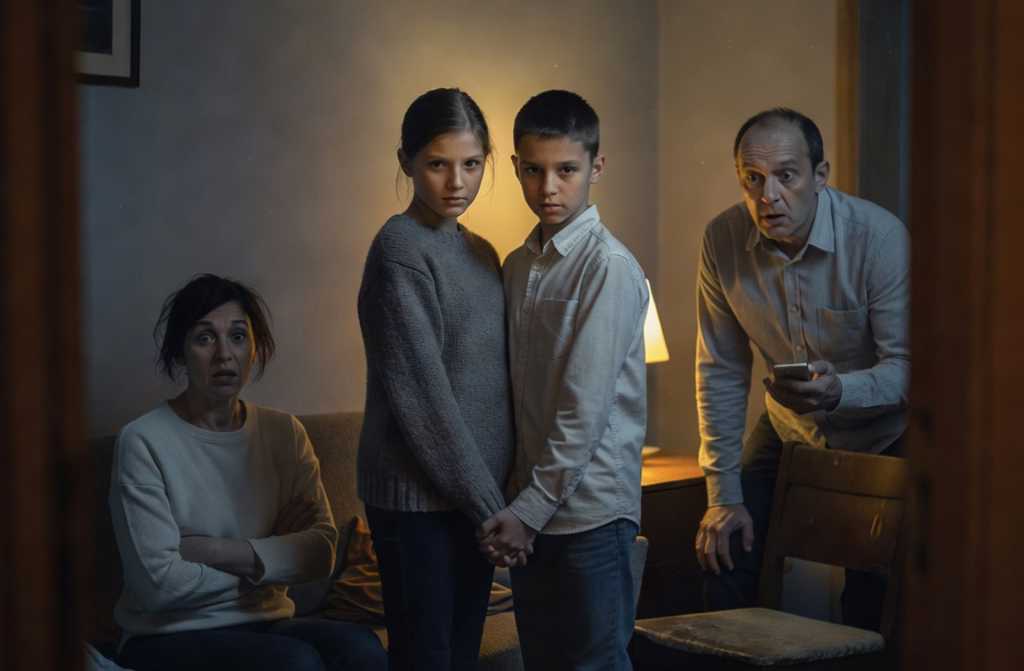
“Parents, we must talk seriously,” the twins declared firmly one evening when both were home. Zosia clasped Mateusz’s hand for support. “Listen fully before responding.”
Michał glanced up surprised from his phone. Agnieszka straightened from sorting items on the sofa, her face registering disbelief at the children’s words.
“This is your poor parenting!” she scoffed, arms crossed. “Children dictating terms as if we report to them!”
“Who’s to talk!” Michał retorted, phone down. “I’m working to provide while you raise them. What did you teach that they now command us?”
Twins exchanged looks, anticipating the shift to accusations but refusing retreat.
“Stop!” Zosia exclaimed tearfully, stepping forward with forced calm despite inner turmoil. “We’ve decided you should divorce.”
Silence fell. Agnieszka gaped, Michał rose slowly.
“News indeed!” she threatened. “Zosia, you’re too young for this. Planning to divide our apartment too?”
“Without divorce, we’ll contact social services,” Mateusz said firmly, gripping Zosia’s hand. “Dad, your job could be at risk your firm dislikes scandals, as you noted, reputation matters.”
“And you, mom,” Zosia added, meeting her eyes, “neighbors will shun you. We can detail the shouting.”
“Threatening us? Our own children!” Agnieszka cried. “How dare you?”
“No threats,” Mateusz assured. “Living this way is impossible. We’re exhausted by shouts, being unheard, requests becoming battles.”
“Divorce, separate, we’ll live with grandma,” they chorused. “Better for all: our calm, your peace. No longer caught between you.”
Parents stood speechless, unaccustomed to lacking retorts. Normally arguments ensued, but now muteness prevailed.
Thirteen-year-olds behaving unexpectedly, hand in hand, firm and serious about matters adults avoided.
Divorce had crossed their minds, halted by child custody concerns. Separating close twins seemed unthinkable.
Grandma’s option emerged newly. Perhaps her love and space offered solution.
“I’ll call mother,” Michał muttered. “If she agrees…”
Agnieszka interrupted wearily: “Then end this mutual torment. Call. I’ll relish not seeing your face daily.”
Words lingered, unintended harshness from built-up resentment.
“I’ll be equally pleased!” Michał replied with ironic pain masking.
No anger, only bitter acknowledgment of their life’s state. Dialing, they averted gazes, sensing a possible irreversible step.
That day the Kowalski family chose fatefully. Michał’s talk with Jadwiga began it. She listened, querying sparingly.
Finishing, she sighed: “If better for the children, I consent. They’ll be safe; I’ll care for them.”
Evening kitchen meeting without prior hostility led to agreement on divorce. Children to grandma, monthly support payments.
Visits promised on alternate weekends to avoid contact.
“I’ll take them Saturday, you Sunday,” Michał proposed wearily, Agnieszka concurring. “Children mustn’t feel abandoned.”
Minimal interaction to prevent conflicts; no parental criticism before kids.
“Still parents,” Michał affirmed, “even post-marriage.”
Time validated the choice. Children relaxed into normal teen life. Zosia pursued art club long desired. Mateusz joined football, gaining friends. Shared activities resumed: city walks, films, school talks free of interruption fear.
Study steadied with quiet space, no distractions. Homework calm improved grades; teachers praised attentiveness.
Life normalized predictable calm replacing prior chaos. No more hiding or flinching; just living as supported teens.
Five years on, as I reflect, the Kowalski family life proceeded calmly. Zosia and Mateusz adapted to routine: education, activities, friendships, grandma evenings. Parents visited separately with gifts, communicating civilly after learning restraint.
Former spouses met at the matura ball. Initial wariness in separate seats thawed.
Michał invited Agnieszka to dance, recalling past. She agreed.
Post-event courtyard talk covered children then history, focusing on positive memories respectfully.
Twins observed happily from distance, though pained by prior enmity.
Unexpectedly next day, parents summoned them to cafe. Over tea, holding hands, Michał announced remarriage: feelings persisted, second chance sought.
Joyful delivery met twin dismay and silence. Doubts of repetition prevailed over persuasion attempts.
Parents felt slighted by lack of comment. Conversation stalled; twins hoped internally for wisdom.
“So we’re studying in the capital?” Zosia queried, laptop open to university pages. “Away from this folly. I foresee the circus outcome!”
“Definitely,” Mateusz affirmed with mature fatigue, hand through hair. “Peace lasts a month or two, then repeats: yells, slams, blames. No more hostage to their bond. No morning mood guesses or claim barrages.”
Pacing, he pondered adult immaturity repeating errors.
“Leave,” he urged at window, dusk orange on city. “Far, beyond their reach. They manage alone. We’re not their counselors or shields. Our dreams deserve protection from further parental insanity.”
“Application timing?” Zosia asked.
“Tomorrow,” he decided. “No reversal chance.”
She nodded, surveying sites for programs, housing, jobs. Notebook lists expanded.
“Peaceful study without their issues,” she concluded. “Distance helps.”
“Right,” he concurred. “Their blame games unheard. Ignore calls for ‘family councils.’ Their ‘second chance’ is theirs alone.”
Remarriage occurred modestly at civil registry with close ones, no fanfare.
Photos showed happiness: smiles, hand-holding, affectionate looks suggesting forgotten grievances and bright prospects. Twins wondered if genuine this time.
Weeks passed peacefully with attentiveness. But habits returned: reproaches over messes, delays, idleness. Conflicts over towels, bread, volume escalated to shouting.
Two months later, as foreseen, groceries dispute led to thrown cup and plate, shattering echoes.
Post-fight calls to children unloaded woes.
Twins learned to cut short: class or work excuses, deferring to weekends that never came. Calls dwindled without guilt; self-preservation prioritized.
Their independent life thrived: Zosia in psychology, volunteering with troubled youth, offering the support she missed.
Mateusz in IT, programming passion, hackathon success, part-time role building skills.
Future plans formed: Zosia’s family practice, Mateusz’s business. Discussions over tea solidified their path.
When parents sought involvement, firm response: “Resolve your matters. Our lives separate.”
Despite “you’re children, support us,” twins noted the error of remarriage and ongoing torment, advocating divorce and separation for peace.
These words, though tough, stemmed from desire for calm.